
Cytotoxic activity - 2D human cell
Personal care & well being In vitro/ex vivo cytotoxicity
Background of cytotoxicity
- Determining the cytotoxic activity of an ingredient or molecule in preclinical studies is done to evaluate its safety profile.
- By testing a new compound on various cell lines (e.g., liver, kidney, or heart cells), highly toxic molecules can quickly be identified.
- Using different cell types, one can predict which organs might be susceptible to damage. For example, a compound that is highly cytotoxic to a liver cell line might indicate a risk of hepatotoxicity in a living organism.
- These assays help establish the concentration at which a compound becomes toxic, often expressed as the CC₅₀ (half maximal cytotoxic concentration).
- This data is essential for setting a safe starting dose range for animal studies and, eventually, for humans.
Objectives of the model
- To characterize the cytotoxic activity of compounds when applied on eukaryotic cells.
Our approach at Vibiosphen
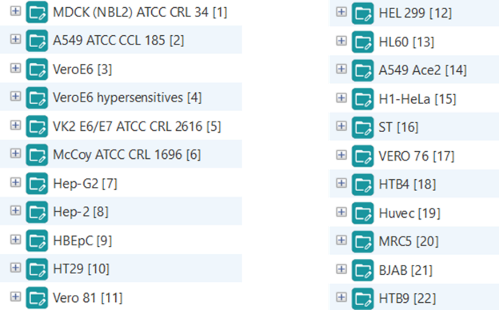
- Our library of cell lines
Method
6 concentrations of 5 compounds were applied to cell monolayers in duplicate.
The impact of the vehicle was also investigated.

The plate was incubated at 37°C.
Viable cells were quantified with Cell Titer Glo 2.0 assay.
Outcomes of Cytotoxicity assay

Compound n°2 and n°5 were cytotoxic at 600µg/ml.
Compound n°4 was cytotoxic from 200µg/ml.
Compound n°1 and n°3 were not cytotoxic for all the tested concentrations.