
The microbiome and its role in psoriasis
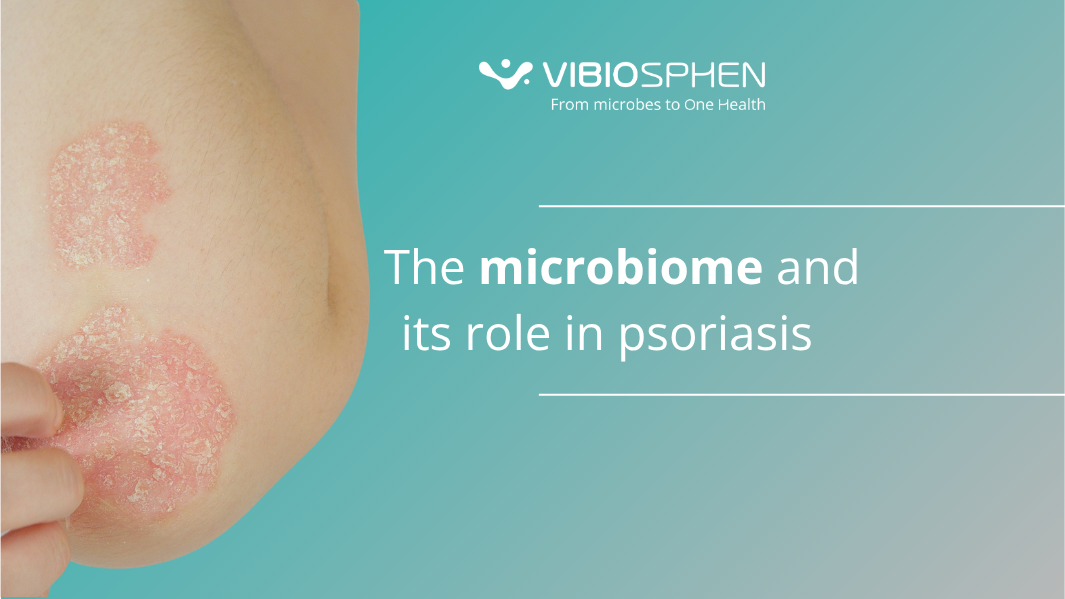
Psoriasis is not just a simple skin condition; it is a chronic, non-contagious, immune-mediated inflammatory disease characterised by flare-ups of red, scaly patches. Worldwide, it is estimated that nearly 125 million people live with psoriasis (1). Psoriasis most commonly develops between the ages of 20 and 40, with around a third of cases occurring in people under the age of 20 (2). Initial management of mild to moderate psoriasis relies on the use of topical treatments, such as emollients or corticosteroids. As for treatment options for severe psoriasis, these include phototherapy, oral medicines or injectable biologics.
However, the link between the microbiome and psoriasis is becoming increasingly recognised.
The skin microbiome: a disrupted ecosystem
Indeed, the skin microbiome plays a key role in the pathogenesis of psoriasis, particularly through dysbiosis. The skin has its own microbiome, which helps to protect against pathogens, regulate the immune system, strengthen the physical and immunological barrier, and perform many other functions. It has been shown that this balance is disrupted in psoriatic lesions. Indeed, studies have revealed differences in both the diversity and relative abundance of microbial taxa compared with healthy skin. An abundance of genera such as Staphylococcus, Streptococcus and Corynebacterium is frequently observed in psoriatic lesions. Conversely, a reduction in the abundance of genera such as Cutibacterium is also observed. These changes may contribute to the persistence of local inflammation and the worsening of lesions (3).
Gut-skin axis:
It is also important to note that the gut-skin axis is at the heart of recent discoveries. This suggests that the health of our gut directly influences the condition of our skin via inflammatory mediators and metabolites. Many scientific papers highlight recurrent changes in the gut microbiome among patients with psoriasis. However, although a link between the microbiome and psoriasis has been established, many questions remain unanswered, and research must therefore continue (4).
Our approach at Vibiosphen
Vibiosphen can assist you in characterising the microbiota, using conventional or molecular microbiological approaches, whether targeted or comprehensive:
- Development of a scalp microbiome model and a skin microbiome model for the screening of compounds or treatments.
- Development of colonised 3D models (human skin explants, reconstructed human epidermis)
- Development of a gut-skin axis model to assess the effect of interventions targeting the microbiota or the intestinal barrier.
📧 Contact us for more information !
Sources :
1. Pharmaceutical Research & Development [Internet]. [cité 21 juill 2026]. Psoriasis. Disponible sur: https://www.abbvie.ch/fr/science/areas-of-focus/immunology/psoriasis.html
2. Comprendre le psoriasis [Internet]. [cité 22 juill 2026]. Disponible sur: https://www.ameli.fr/assure/sante/themes/psoriasis/comprendre-psoriasis
3. Celoria V, Rosset F, Pala V, Dapavo P, Ribero S, Quaglino P, et al. The Skin Microbiome and Its Role in Psoriasis: A Review. Psoriasis Targets Ther. 26 oct 2023;13:71‑8. doi:10.2147/PTT.S328439 PubMed PMID: 37908308; PubMed Central PMCID: PMC10614657.
4. Sikora M, Stec A, Chrabaszcz M, Knot A, Waskiel-Burnat A, Rakowska A, et al. Gut Microbiome in Psoriasis: An Updated Review. Pathogens. 12 juin 2020;9(6):463. doi:10.3390/pathogens9060463 PubMed PMID: 32545459; PubMed Central PMCID: PMC7350295.
Catégories
Archives
- juillet 2026 (1)
- juin 2026 (1)
- avril 2026 (1)
- mars 2026 (2)
- février 2026 (2)
- janvier 2026 (2)
- octobre 2025 (1)
- juillet 2025 (1)
- juin 2025 (3)
- mai 2025 (1)
- mars 2025 (1)
- mai 2024 (1)
- avril 2024 (2)
- septembre 2023 (1)
- août 2023 (1)
- mai 2023 (1)
- avril 2023 (2)
- février 2023 (1)
- décembre 2022 (1)
- octobre 2022 (1)
- juin 2022 (1)
- mai 2022 (3)
- avril 2022 (1)
- février 2022 (2)
- janvier 2022 (3)
- décembre 2021 (2)
- novembre 2021 (1)