
Model of oral care-biofilm
Personal care & well being In vitro/ex vivo testing
Background of model of oral care
Dental plaque is a complex mixed polymicrobial community consisting of more than 500 different bacterial and fungal species that can cause varying degrees of severity of disease, such as caries, periodontitis, or gingivitis. This dental plaque is mainly due to the formation of a spatially organised and highly complex biofilm, i.e. a multicellular structure embedded in a self-produced extracellular matrix, colonizing a biotic or abiotic surface.
Four main microorganisms are largely responsible for the formation of dental plaque biofilm:
• Streptococcus mutans: Gram-positive cocci
• Streptococcus oralis: Gram-positive cocci
• Candida albicans: yeast
• Porphyromonas gingivalis: Gram-negative coccobacilli that do not form spores, anaerobic
Objectives of the model of oral care
To develop a in vitro model of biofilms formed by microorganisms related to dental plaque.
To quantify the impact of a molecule on the destruction of the biofilm.
Our approach at Vibiosphen
• Individual cultures of S. mutans, S. oralis, C. albicans and P. gingivalis.
• Microplate wells were seeded by S. mutans, S. oralis, C. albicans and P. gingivalis and incubated in the appropriate conditions to allow biofilm formation.
• The biofilm density was quantified with crystal violet staining.
Outcomes of model of oral care
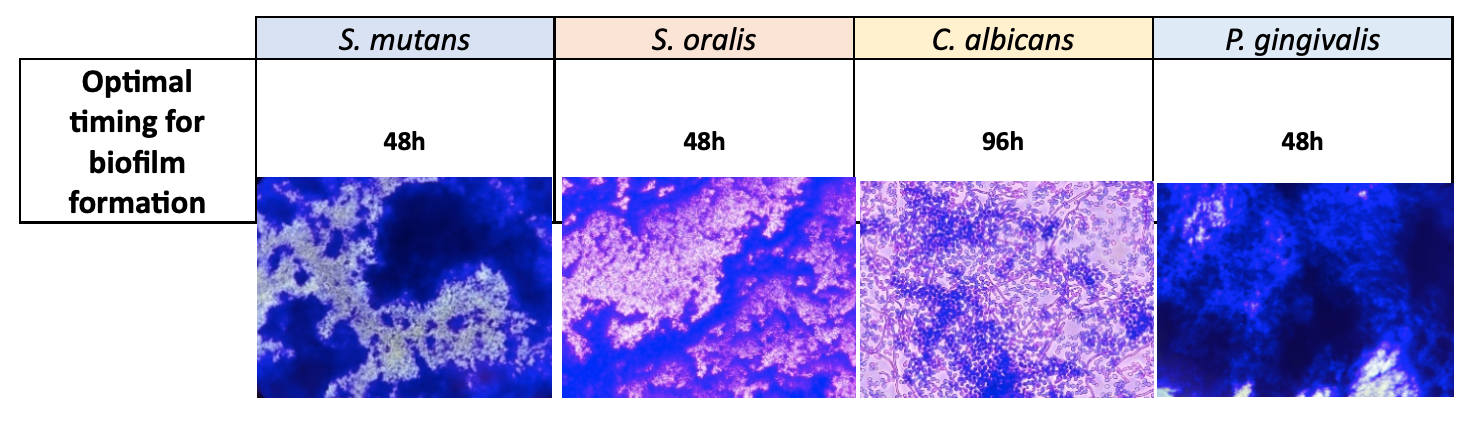
Figure 1 : Biofilm obtained in optimal conditions for each microbial species
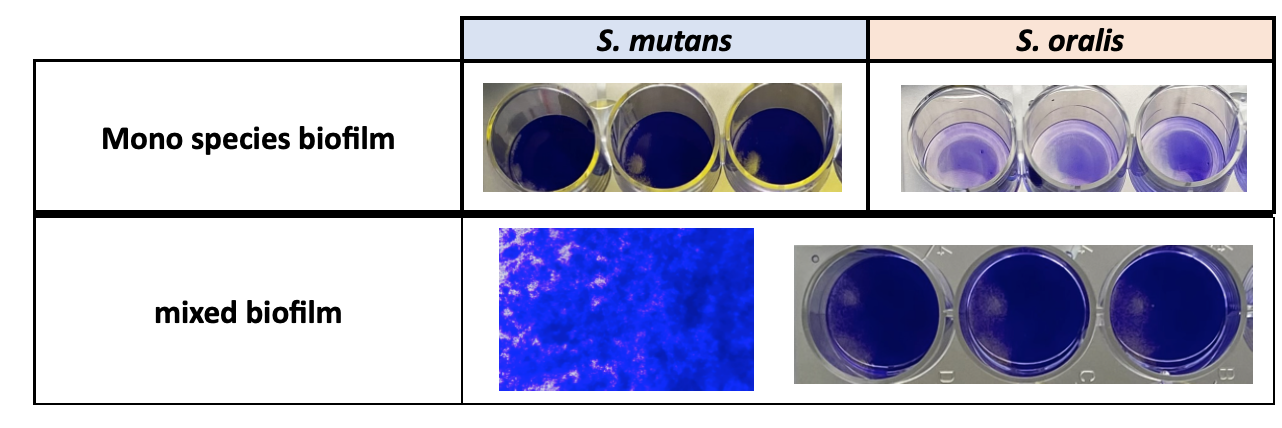
Figure 2 : Mixed biofilm
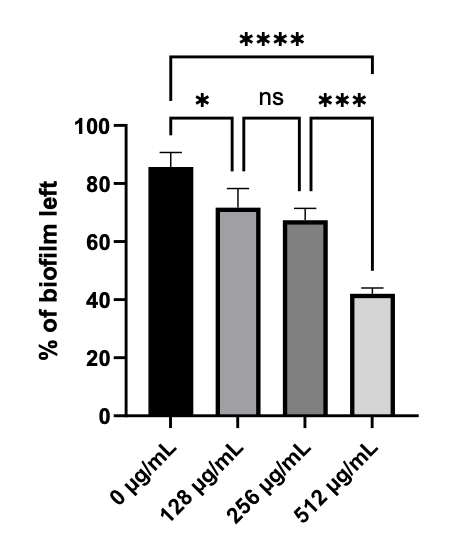
Figure 3 : Impact of a range of concentrations of a molecule on the destruction of a biofilm formed by P. gingivalis