
The scalp microbiome
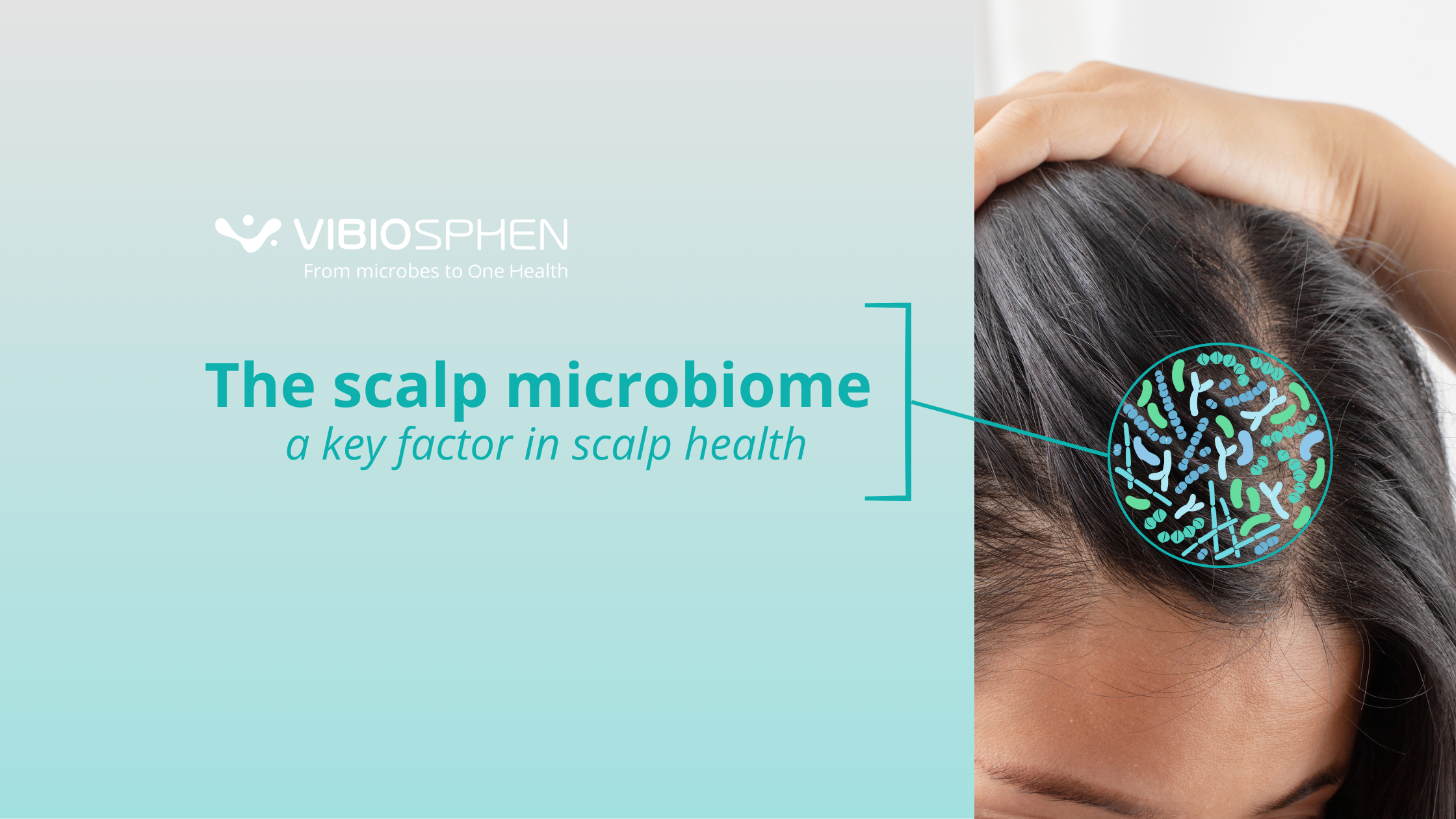
While many articles discuss the role of the microbiome in skin conditions, few focus on the scalp microbiome and its implications in certain pathologies. Yet, interest in this field is growing (1).
The unique ecosystem of the scalp:
The scalp has its own microbiome, distinct from that of other skin surfaces due to its specific environmental conditions (2) :
High humidity
Protection from UV rays
A pH level conducive to microbial growth
The scalp microbiome is essential for maintaining homeostasis and regulating inflammation (3).
Advances in sequencing have revealed that the scalp harbors a microbiome mainly dominated by commensal bacteria and fungi, the primary ones being (4) :
Fungi of the genus Malassezia
Bacteria of the genus Cutibacterium
Bacteria of the genus Staphylococcus
Microbial balance and dysbiosis:
A healthy scalp is characterized by a balance between the different populations that make up the hair ecosystem. A disruption of this balance, known as dysbiosis, is in some cases associated with the onset of conditions such as:
Seborrheic dermatitis or excessive dandruff (1,3)
Androgenetic alopecia (1,3)
Seborrheic dermatitis is strongly associated with an increase in Malassezia and Staphylococcus populations, correlated with a decrease in Cutibacterium. Lipases secreted, particularly by M. restricta and also C.acnes hydrolyze sebum into triglycerides, which are in turn hydrolyzed into fatty acids, causing impairment of the skin barrier, inflammation, and accelerated desquamation (3).
Androgenetic alopecia is the most common form of hair loss in both men and women, characterized by the gradual miniaturization of hair follicles. Although it is primarily caused by hormonal and genetic factors, some studies suggest that micro-inflammation at the follicular level, potentially exacerbated by dysbiosis, may accelerate hair loss (1).
The microbiome is a dynamic ecosystem influenced by several factors:
The host
The environment
Lifestyle habits
Our expertise:
Together, we can measure the impact of your hair care ingredients on the scalp microbiome by offering you tailored preclinical tests.
Efficacy testing on synthetic microbiota
Development of synthetic microbiota
Conventional, targeted, or comprehensive microbiological approaches (ex: characterization of the microbiome in clinical samples)
In vitro measurement of lipase activity
Development of an ex vivo model colonized by microbial species
Bibliography:
1. Polak-Witka K, Rudnicka L, Blume-Peytavi U, Vogt A. The role of the microbiome in scalp hair follicle biology and disease. Exp Dermatol. 2020;29(3):286‑94. doi:10.1111/exd.13935
2. Saxena R, Mittal P, Clavaud C, Dhakan DB, Hegde P, Veeranagaiah MM, et al. Comparison of Healthy and Dandruff Scalp Microbiome Reveals the Role of Commensals in Scalp Health. Front Cell Infect Microbiol. 4 oct 2018;8. doi:10.3389/fcimb.2018.00346
3. Shah RR, Larrondo J, Dawson T, Mcmichael A. Scalp microbiome: a guide to better understanding scalp diseases and treatments. Arch Dermatol Res. 29 juill 2024;316(8):495. doi:10.1007/s00403-024-03235-2 PubMed PMID: 39073596.
4. Grimshaw SG, Smith AM, Arnold DS, Xu E, Hoptroff M, Murphy B. The diversity and abundance of fungi and bacteria on the healthy and dandruff affected human scalp. PLOS ONE. 18 déc 2019;14(12):e0225796. doi:10.1371/journal.pone.0225796
Catégories
Archives
- juin 2026 (1)
- avril 2026 (1)
- mars 2026 (2)
- février 2026 (2)
- janvier 2026 (2)
- octobre 2025 (1)
- juillet 2025 (1)
- juin 2025 (3)
- mai 2025 (1)
- mars 2025 (1)
- mai 2024 (1)
- avril 2024 (2)
- septembre 2023 (1)
- août 2023 (1)
- mai 2023 (1)
- avril 2023 (2)
- février 2023 (1)
- décembre 2022 (1)
- octobre 2022 (1)
- juin 2022 (1)
- mai 2022 (3)
- avril 2022 (1)
- février 2022 (2)
- janvier 2022 (3)
- décembre 2021 (2)
- novembre 2021 (1)