
C. acnes's passport
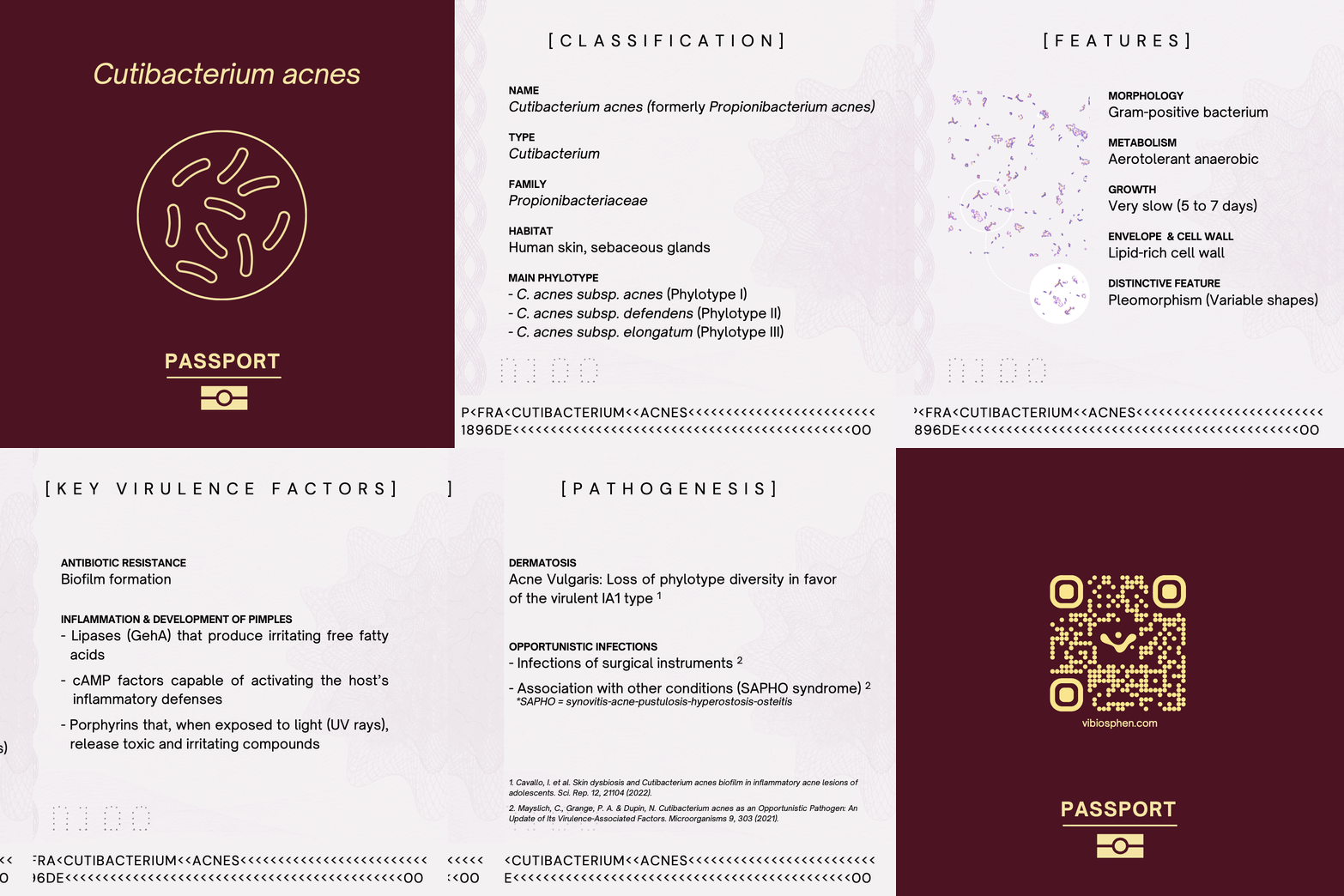
CLASSIFICATION
Name : Cutibacterium acnes (formerly Propionibacterium acnes)
Type : Cutibacterium
Family : Propionibacteriaceae
Habitat : Human skin, sebaceous glands
Main phylotype :
- C. acnes subsp. acnes (Phylotype I)
- C. acnes subsp. defendens (Phylotype II)
- C. acnes subsp. elongatum (Phylotype III)
FEATURES
Morphology : Gram-positive bacterium
Metabolism : Aerotolerant anaerobic
Growth : Very slow (5 to 7 days)
Envelope & Cell Wall : Lipid-rich cell wall
Distinctive feature : Pleomorphism (Variable shapes)
KEY VIRULENCE FACTORS
Antibiotic resistance : biofilm formation
Inflammation & Development of pimples :
- Lipases (GehA) that produce irritating free fatty iiiacids
- cAMP factors capable of activating the host’s iiiiinflammatory defenses
- Porphyrins that, when exposed to light (UV rays), iiirelease toxic and irritating compounds
PATHOGENESIS
Dermatosis :
- Acne Vulgaris: Loss of phylotype diversity in favor of the virulent IA1 type 1
Opportunistic infections :
- Infections of surgical instruments 2
Association with other conditions (SAPHO* syndrome) 2
*SAPHO = synovitis-acne-pustulosis-hyperostosis-osteitis
1. Cavallo, I. et al. Skin dysbiosis and Cutibacterium acnes biofilm in inflammatory acne lesions of adolescents. Sci. Rep. 12, 21104 (2022).
2. Mayslich, C., Grange, P. A. & Dupin, N. Cutibacterium acnes as an Opportunistic Pathogen: An Update of Its Virulence-Associated Factors. Microorganisms 9, 303 (2021).



Catégories
Archives
- octobre 2026 (1)
- septembre 2026 (1)
- août 2026 (1)
- juillet 2026 (1)
- juin 2026 (1)
- avril 2026 (1)
- mars 2026 (2)
- février 2026 (2)
- janvier 2026 (2)
- octobre 2025 (1)
- juillet 2025 (1)
- juin 2025 (3)
- mai 2025 (1)
- mars 2025 (1)
- mai 2024 (1)
- avril 2024 (2)
- septembre 2023 (1)
- août 2023 (1)
- mai 2023 (1)
- avril 2023 (2)
- février 2023 (1)
- décembre 2022 (1)
- octobre 2022 (1)
- juin 2022 (1)
- mai 2022 (3)
- avril 2022 (1)
- février 2022 (2)
- janvier 2022 (3)
- décembre 2021 (2)
- novembre 2021 (1)