
Role of the microbiome in Atopic Dermatitis
General overview of atopic dermatitis
Atopic dermatitis (AD) is a chronic inflammatory skin disease characterized by intense itching and recurrent lesions (1; 2; 3; 4). Beyond cutaneous lesions, AD represents a major psychosocial burden for patients and their relatives (2; 3; 5). Nowadays, it’s considered one of the most common chronic diseases, affecting up to 20% of children and approximately 10% of adults (5). AD is now understood as a complex and multifactorial disease. It includes genetic abnormalities, alterations of the epidermal barrier, and an imbalance of the cutaneous microbiota (2; 3). In this context, the study of the microbiome emerges as a central focus, as it's now clearly established that dysbiosis plays an important role in the pathogenesis of AD and its severity (1; 2; 3; 4; 5; 6).
From skin barrier disruption to microbial dysbiosis
Most often, everything begins with a defective skin barrier, caused by genetic abnormalities in structural and immune-related genes. This reduction in the skin barrier response makes the skin more sensitive to allergens. The skin becomes dry and irritated, leading to additional physical stress. This results in an increase in skin pH, an alteration of keratinocyte adhesion properties, and an increase in inflammation (2). All of these elements play a role in cutaneous microbiome dysbiosis. Several studies have highlighted a significant increase in colonization by Staphylococcus aureus and a decrease in microbial diversity in skin affected by AD (1; 2; 6).
Mechanisms of pathogenicity of S. aureus
The increase in skin pH is conducive to colonization by Staphylococcus aureus. It’s assumed that S. aureus increases the severity of AD by secreting a series of virulence factors that damage the skin barrier and enhance inflammation (2). It has also been discovered that S. aureus can trigger an exacerbated inflammatory response through the production of superantigens (2).
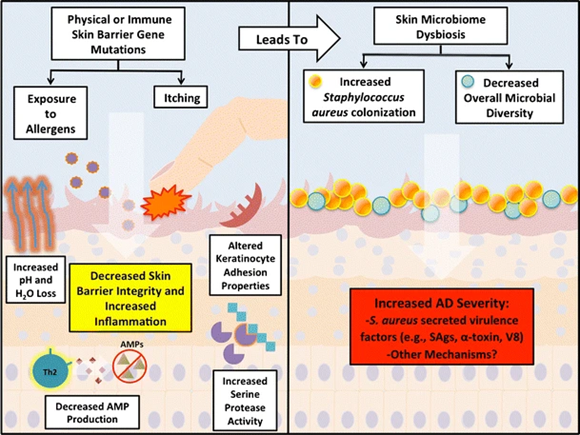
Figure 1 from: The Role of the Skin Microbiome in Atopic Dermatitis, 2015 (2)
Intestinal microbiota
Beyond the cutaneous microbiome, it's necessary to take the intestinal microbiota into account. Several studies demonstrate that an imbalance of the intestinal microbiota induces metabolic and immune alterations that are closely linked to the development of diseases such as AD (7). Consequently, the “gut-skin” axis is emerging as a new target for the prevention and treatment of AD. Patients with AD present marked alterations in their intestinal microbiota. Research has revealed a decrease in microbial diversity, as well as a reduced abundance of beneficial microorganisms (7). This imbalance directly impacts immunity by depriving the body of the signals necessary to regulate inflammation (7).
The path to new treatments
Given that the severity of AD is partly due to colonization by Staphylococcus aureus, numerous antimicrobial therapeutic strategies have been developed. Nevertheless, although many topical and oral antibiotics are able to eliminate S. aureus in the short term in patients with AD, few have observed a reduction in AD severity (2). Overall, the development of other, more targeted therapies is necessary to correct the dysbiosis observed in skin affected by AD.
At Vibiosphen, we offer solutions tailored to the needs of our clients who wish to focus on the pathology of atopic dermatitis:
Assistance with microbiota characterization from clinical samples
Targeted or global microbiological or molecular approaches
Development of synthetic skin microbiome models
3D models, including human skin explants or reconstructed human epidermis colonized with microbial species of interest
Robust gut-skin axis model
We are thus contributing to a better understanding of microbial interactions and to the assessment of the impact of new formulations on the skin microbiome.
Bibliography
1. Nakatsuji T, Gallo RL. The role of the skin microbiome in atopic dermatitis. Annals of Allergy, Asthma & Immunology. 2019.
2. Williams MR, Gallo RL. The Role of the Skin Microbiome in Atopic Dermatitis. Current Allergy and Asthma Reports. 2015.
3. Sroka-Tomaszewska J, Trzeciak M. Molecular Mechanisms of Atopic Dermatitis Pathogenesis. International Journal of Molecular Sciences. 2021.
4. Bai R, Zheng Y, Dai X. Atopic dermatitis: diagnosis, molecular pathogenesis, and therapeutics. Molecular Biomedicine. 2025.
5. Weidinger S, Novak N. Atopic dermatitis. Lancet. 2016.
6. Lee CH., et al. Skin Microbiome Shifts in Various Dermatological Conditions. Journal of Clinical Medicine. 2025.
7. Fang Z, et al. Gut Microbiota, Probiotics, and Their Interactions in Prevention and Treatment of Atopic Dermatitis: A Review. Frontiers in Immunology. 2021.


Catégories
Archives
- octobre 2026 (1)
- septembre 2026 (1)
- août 2026 (1)
- juillet 2026 (1)
- juin 2026 (1)
- avril 2026 (1)
- mars 2026 (2)
- février 2026 (2)
- janvier 2026 (2)
- octobre 2025 (1)
- juillet 2025 (1)
- juin 2025 (3)
- mai 2025 (1)
- mars 2025 (1)
- mai 2024 (1)
- avril 2024 (2)
- septembre 2023 (1)
- août 2023 (1)
- mai 2023 (1)
- avril 2023 (2)
- février 2023 (1)
- décembre 2022 (1)
- octobre 2022 (1)
- juin 2022 (1)
- mai 2022 (3)
- avril 2022 (1)
- février 2022 (2)
- janvier 2022 (3)
- décembre 2021 (2)
- novembre 2021 (1)