
Microneutralization assay
In vitro/ex vivo testing Antiviral and antibody evaluation
It is critical to note that the humoral immune response elicited by vaccination generates a polyclonal pool of antibodies; however, only a specific fraction of these induced antibodies possess true neutralizing capabilities, while others function strictly as non-neutralizing binding antibodies.
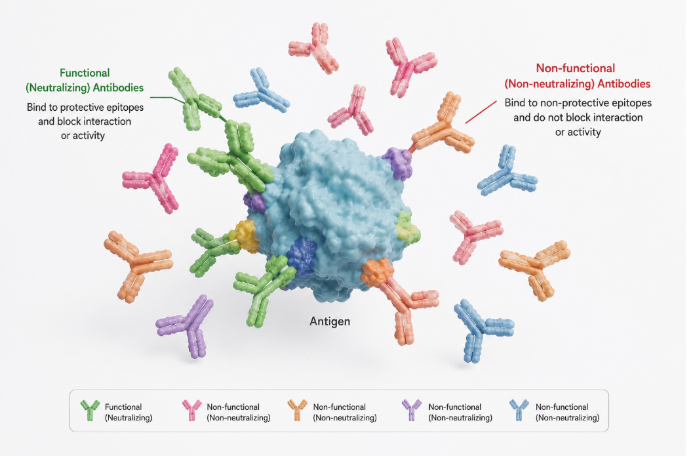
Seroneutralization—frequently termed a neutralization assay—represents the reference standard for quantifying neutralizing antibodies within clinical serum samples or during preclinical vaccine evaluation.
Unlike conventional binding assays (such as ELISAs) that strictly measure antibody-antigen binding, this functional method directly assesses efficacy. Specifically, it quantifies the biological capacity of antibodies to neutralize viral infectivity by disrupting key mechanistic pathways, thereby preventing cellular entry and subsequent intracellular replication within host cells.
This functional quantification is achieved through distinct virological methodologies:
Cytopathic Effect (CPE) Inhibition Assay: Evaluates the capacity of serum antibodies to prevent virus-induced morphological degeneration and cell death in the host monolayer.
Median Tissue Culture Infectious Dose (TCID 50) Determination: Quantifies the specific antibody dilution required to yield a reduction in viral infectivity across replicated culture wells.
Plaque Reduction Neutralization Test (PRNT): Measures the precise percentage reduction in discrete viral plaques, serving as the ultra-sensitive benchmark for titer calculations.