
Lung organoids
In vitro/ex vivo testing Antibacterial and antifungal
Current preclinical research relies heavily on traditional in vitro cell cultures and in vivo animal models. However, standard flat cell cultures cannot replicate the intricate architecture and physiological functions of human tissue; and regulatory bodies across both the United States and Europe are actively encouraging the adoption of human-centered, non-animal preclinical alternatives. This shift underscores a global commitment to lowering dependency on animal research without compromising the safety or efficacy standards required for novel therapies.
To bridge this gap, recent breakthroughs in tissue engineering and 3D cell culture have led to the creation of organoids. These complex, lab-grown tissue models closely replicate the cellular makeup, structure, and behavior of native human organs.
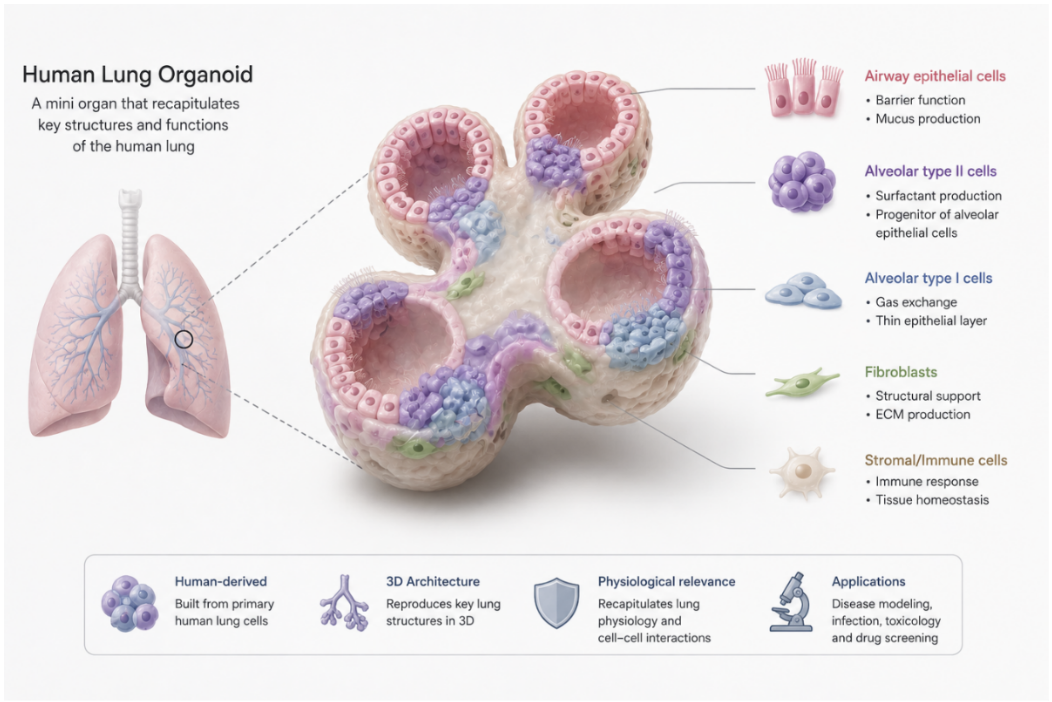
By capturing the essential physiological and structural traits of their source tissues, organoids serve as highly predictive and relevant platforms for disease modeling, drug development, and therapeutic testing.