
Selective index - CC50 / IC50 assay
In vitro/ex vivo testing Antiviral and antibody evaluation
In drug development, the selectivity index (SI) is a quantitative parameter used to assess the therapeutic window of a candidate compound by comparing its cytotoxicity toward host cells with its pharmacological activity against the intended biological target.
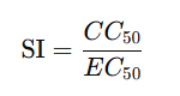
CC₅₀ is the concentration that causes toxicity in 50% of host cells.
EC₅₀ is the concentration that produces 50% of the desired therapeutic or biological effect.
A high selectivity index means the compound is effective at concentrations far below those that are toxic, which is generally favorable.
A low selectivity index means the effective dose is close to the toxic dose, which suggests a narrow safety margin.
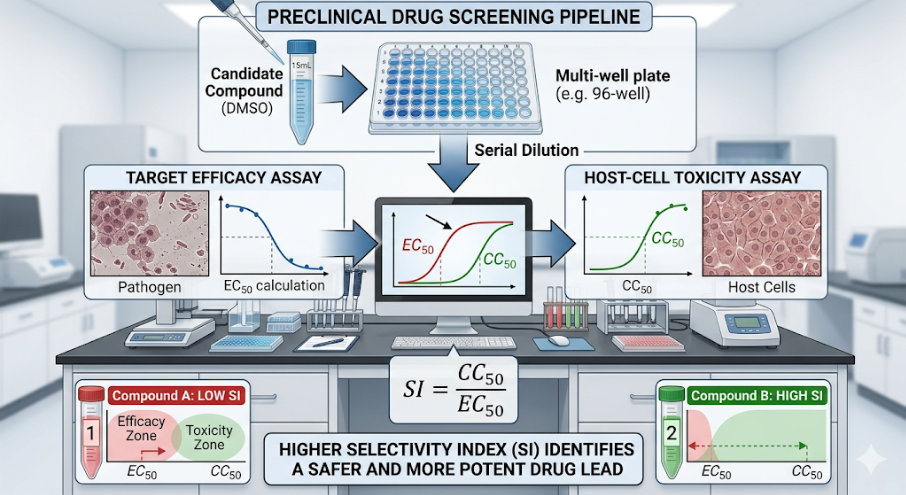
Following the determination of a favorable selectivity index, the development program should progress toward confirmatory pharmacological profiling and early preclinical characterization. This typically includes reproducing the efficacy and cytotoxicity results in independent experiments, expanding the evaluation to additional disease-relevant and host-cell models, and benchmarking the compound against appropriate reference standards.