
Antimicrobial susceptibility testing
In vitro testing Microbiology powered
An antibiogram is an aggregated laboratory data that profiles the in vitro susceptibility patterns of microbial isolates to a selected panel of antimicrobial agents.
This phenotypic clinical isolate characterization serves as a direct, standardized method to determine the quantitative Minimum Inhibitory Concentration (MIC) of known antibiotics against a specific bacterial pathogen.
Microorganisms are subjected to phenotypic susceptibility testing via E-test (Biomérieux) or disk diffusion (Biomérieux).
Minimum Inhibitory Concentrations (MICs) are translated into clinical categories - Susceptible (S), Intermediate (I), or Resistant (R) - based on annually updated CLSI or EUCAST breakpoints.
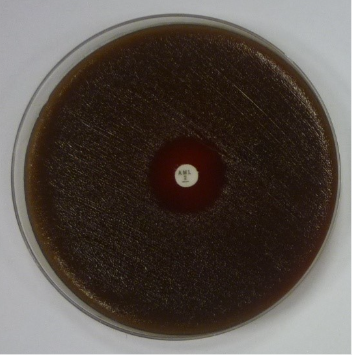
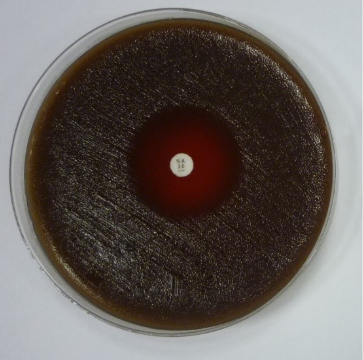
MIC determination by disk diffusion method on Haemophilus influenzae for Nalidixic acid (NA, left) and Amoxicillin (AML, right).
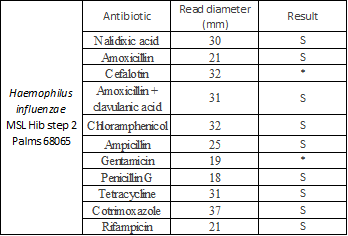
MIC results with disk diffusion method on Haemophilus influenzae (S: sensitive, R: resistant, *: there was no data on EUCAST)
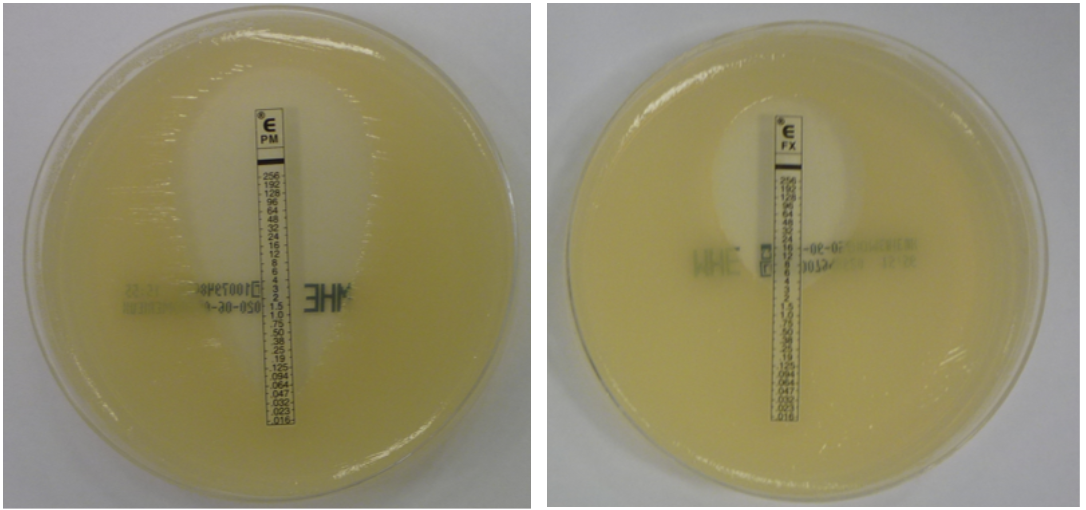
MIC determination by E-test method on Escherichia coli ATCC 25922 for Cefepime (PM) (left) and for Cefoxitin (FX) (right)