Antimicrobial synergy testing
In vitro/ex vivo testing Antibacterial and antifungal
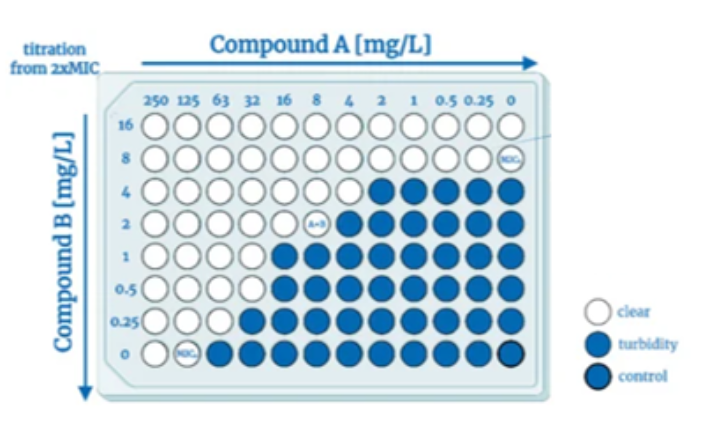
Synergy, or checkerboard, assays are standardized in vitro antimicrobial susceptibility assays used to evaluate the pharmacodynamic interaction between two or more therapeutic agents. They are widely employed during drug development to determine whether combining compounds enhances antimicrobial activity compared with each agent administered alone. These assays are particularly valuable in the development of novel antibiotics, bacteriophage-antibiotic combinations, antimicrobial peptides, antifungals, and adjuvant therapies.
In drug development, checkerboard assays serve several important purposes:
Identification of synergistic drug combinations that improve antimicrobial efficacy.
Reduction of effective drug concentrations, potentially minimizing dose-dependent toxicity.
Assessment of novel therapeutic modalities, including bacteriophage-antibiotic combinations, antimicrobial peptides, monoclonal antibodies, and small-molecule adjuvants.
Prioritization of candidate combinations for subsequent pharmacodynamic studies, time-kill assays, biofilm models, organoid systems, and in vivo efficacy studies.
Investigation of combination therapies against multidrug-resistant (MDR), pathogens.