
In vitro/ex vivo testing
Antibacterial and antifungal
Anti-infective drug development
Background of in vitro-biofilm
- Biofilm is a three-dimensional community of bacteria with intricate architecture that lives on surfaces and is encapsulated in a network of hydrated polysaccharides, proteins and DNA
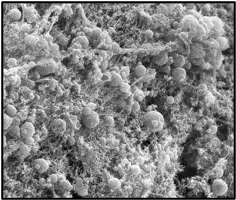
- The biofilm state appears to be natural and predominant state of bacteria
- The biofilms are responsible for causing a broad range of chronic diseases
- Bacterial biofilms significantly enhance antibiotic resistance by inhibiting the penetration of antibiotics, resulting in an increasingly serious situation
- A major focus is being put on various anti-biofilm molecules
Objectives of the model
- To determine the anti-biofilm activity of a molecule using an in vitro model of biofilm formed by Staphylococcus aureus MRSA
Our approach at Vibiosphen
- Microplate wells were seeded by S. aureus for 24h or 48h to allow biofilm formation
- A range of concentrations of the molecule was applied on the biofilm, in triplicate for 24h
- The biofilm density was quantified with crystal violet staining
Outcomes of in vitro-biofilm
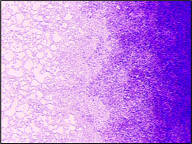
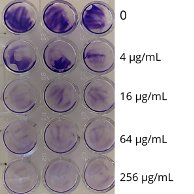
S. aureus biofilm formed on an abiotic surface and stained with crystal violet
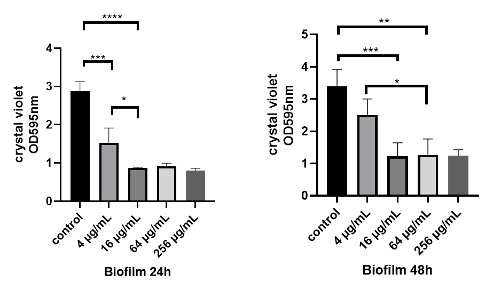
Quantification of S. aureus biofilm subsequently to a 24h treatment with increasing amounts of the molecule
- These results support the molecule as a novel drug candidate and an effective treatment strategy for Staphylococcus aureus biofilm-associated infections
- A possible application of this discovery could lie in methods of inhibiting bacterial adhesion on medical implants/device.
Why Choose Vibiosphen?
- Proven expertise in preclinical research
- Flexible and customized study designs adapted to sponsor requirements (see downloads available as example)
- Advanced facilities to ensure reliable and reproducible results (BSL2 and BSL3)
- Strong collaborations with pharmaceutical companies, biotech firms, and academic partners
- Vibiosphen combines scientific excellence with industry know-how to deliver actionable preclinical data that drive innovation in infectious disease therapeutics.
Contact Us
If you are developing new treatments or vaccines, Vibiosphen can help accelerate your research.
Contact us today to discuss your project and explore how our models can support your development strategy.
We will be pleased to facilitate your project by providing a customized study design to your project objectives.
Dermocosmetic actives and the skin microbiome
Background of in vitro-biofilm
- Biofilm is a three-dimensional community of bacteria with intricate architecture that lives on surfaces and is encapsulated in a network of hydrated polysaccharides, proteins and DNA
- The skin microbiome exists predominantly in structured microbial communities, where biofilm formation represents a natural and highly adaptive state of skin-associated microorganisms
- Cutaneous biofilms are increasingly associated with a wide range of chronic and recurrent dermatological conditions, including acne, atopic dermatitis, dandruff, seborrheic dermatitis, and impaired wound healing
- Microbial biofilms on the skin significantly reduce the efficacy of antimicrobial, preservative, and cosmetic active ingredients by limiting compound penetration and enhancing microbial tolerance mechanisms
- Considerable efforts are now focused on the development of innovative anti-biofilm dermocosmetic ingredients and formulations capable of disrupting biofilm architecture while preserving skin microbiota balance
Objectives of the model
- To determine the anti-biofilm activity of a molecule using an in vitro model of biofilm formed by Staphylococcus aureus
Our approach at Vibiosphen
- Microplate wells were seeded by S. aureus for 24h or 48h to allow biofilm formation
- A range of concentrations of the molecule was applied on the biofilm, in triplicate for 24h
- The biofilm density was quantified with crystal violet staining
Outcomes of in vitro-biofilm
S. aureus biofilm formed on an abiotic surface and stained with crystal violet
Quantification of S. aureus biofilm subsequently to a 24h treatment with increasing amounts of the molecule
- These results support the molecule as a novel ingredient candidate and an effective solution strategy for Staphylococcus aureus biofilm.
Push the lines with us
Thank you! Your submission has been received!
Oops! Something went wrong while submitting the form.