Assessment of the anti-C. acnes lipase activity of an ingredient
In vitro testingMicrobiology powered
Background of anti-C. acnes lipase activity
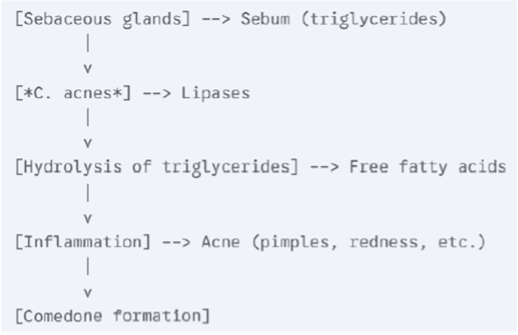
Cutibacterium acnes (C. acnes) is involved in the pathogenesis of acne by inducing inflammation and biofilm formation, along with other virulence factors.
Lipases play an important role in pathogenesis of acne by hydrolysing sebum triglycerides and releasing irritating free fatty acids in the pilosebaceous follicles.
Lipase has generated a high interest as a pharmacological target for antiacne drugs.
Objectives of the model
To determine the lipase activity released by C. acnes using a fluorogenic substrate.
Our approach at Vibiosphen
Lipase activity was measured using the 4-methyl umbelliferyl oleate (MUO) assay (Sigma-Aldrich).
Two C. acnes strains were used (high and low lipase expression)
The strains were grown in brain heart infusion (BHI) broth, incubated anaerobically. Supernatants were centrifuged, filtrated and then mixed with MUO. The mixtures were incubated for 2h at 37°C in the dark. The levels of 4-methylumbelliferone released by the lipase were measured using a fluorometric microplate reader.
Validation of the assay was performed by cultivating C. acnes in the presence of ketoconazole, a lipase expression inhibitor.
Outcomes of anti-C. acnes lipase activity
Fig. Quantification of lipase activity using the MUO-based assay
This assay was developed and validated so that it can be used to evaluate anti-acne molecules in development.